


Functional Fitness: Training That Supports Everyday Movement
Strength gained in the gym should improve life outside of it. Yet many training programs focus on isolated muscles, fixed machines, and movements that rarely translate to daily activities. Functional fitness shifts the focus from aesthetics and numbers to movement quality, coordination, and real-world capability.
Functional training prepares the body for the demands of everyday life – lifting, carrying, reaching, walking, twisting, stabilizing, and reacting. When training reflects how the body actually moves, strength becomes usable, resilient, and sustainable.
What Functional Fitness Really Means
Functional fitness is not a specific workout style – it is a training philosophy. It emphasizes movement patterns over isolated muscles, coordination over repetition, and stability over load alone.
The human body evolved to move as an integrated system. Everyday actions require multiple joints, muscles, and stabilizers to work together. Functional training reflects this by using compound, multi-planar movements.
Instead of training muscles in isolation, functional fitness trains the body to produce, control, and transfer force efficiently.
Movement Patterns That Matter Most
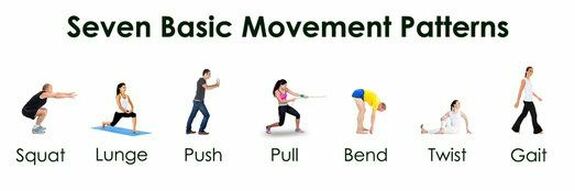
Most daily tasks fall into a small number of foundational movement patterns. Training these patterns improves efficiency, reduces injury risk, and builds confidence in real-life situations.
- Squatting: sitting, standing, lifting from the ground
- Hinging: bending, picking up objects safely
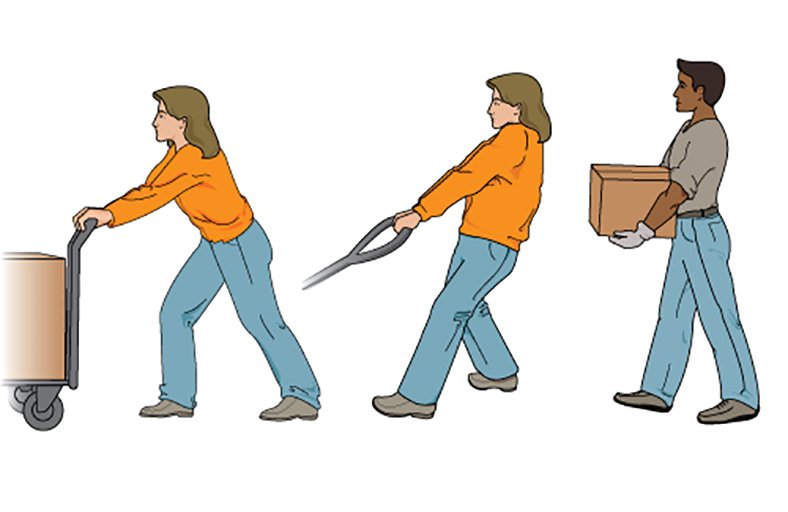
- Pushing: doors, objects, getting up from the floor
- Pulling: carrying bags, opening drawers
- Rotating: turning, reaching, changing direction
- Carrying: groceries, equipment, children
Training these patterns develops coordination between muscles, joints, and the nervous system – the foundation of usable strength.
:upscale()/2024/03/20/951/n/1922729/9292f2d165fb59f4533196.59255375_PS23_Fitness.jpg)
Core Stability and Balance Drive Real Strength
In functional fitness, the core is not trained for appearance but for stability and force transfer. A strong core allows the arms and legs to generate power safely and efficiently.
Balance and proprioception – the body’s awareness of position – are equally important. Everyday movement is unpredictable. Functional training improves the ability to stabilize and adapt under changing conditions.
Why Functional Fitness Reduces Injury Risk
Injuries often occur not because of weakness, but because of poor movement coordination or limited mobility. Functional training improves joint integrity by strengthening muscles through full, controlled ranges of motion.
By reinforcing proper movement mechanics, functional fitness helps distribute load evenly across the body, reducing excessive stress on joints and connective tissues.
- Improves joint control and stability
- Enhances mobility and usable range
- Strengthens connective tissues
- Improves reaction and coordination
Functional Fitness Supports Long-Term Independence
The ultimate goal of fitness is not peak performance for a short phase of life, but the ability to move well, confidently, and independently for decades. Functional fitness directly supports longevity by reinforcing the movement patterns required for daily living as the body ages.
As years pass, muscle mass, joint mobility, balance, and reaction speed naturally decline if they are not actively maintained. Functional training slows this process by continually challenging the body to stabilize, coordinate, and generate force in practical ways. This helps preserve strength where it matters most – in standing up from the floor, climbing stairs, carrying objects, and maintaining balance during unexpected movements.
Independence is not lost suddenly; it erodes gradually through reduced movement confidence and physical capability. Functional fitness addresses this by building trust in the body. When movements are practiced regularly under controlled conditions, daily tasks feel safer and less intimidating.
This approach makes functional fitness valuable at every stage of life. For beginners, it establishes strong movement foundations. For experienced athletes, it reinforces joint health and longevity. For older adults, it supports mobility, fall prevention, and quality of life without requiring extreme intensity.
Training That Carries Over to Real Life
Functional fitness aligns training with the realities of everyday movement. Instead of preparing the body for controlled, predictable environments, it builds strength, stability, and coordination that adapt to real-world demands. This makes training feel purposeful rather than abstract.
When strength supports daily life, consistency becomes easier. Training no longer feels disconnected from reality or driven solely by appearance or numbers. Each session reinforces movement quality, body awareness, and physical capability that shows up outside the gym.
Over time, this approach changes how fitness is perceived. Workouts become maintenance for life rather than short-term challenges to endure. Progress is measured by how well the body moves, recovers, and adapts – not just by performance metrics.
At WorkoutFreak, functional fitness is treated as a foundation, not a trend. By prioritizing movement patterns, joint integrity, and long-term resilience, training supports not just workouts, but the ability to live actively, confidently, and independently for years to come.
Leave a Reply